
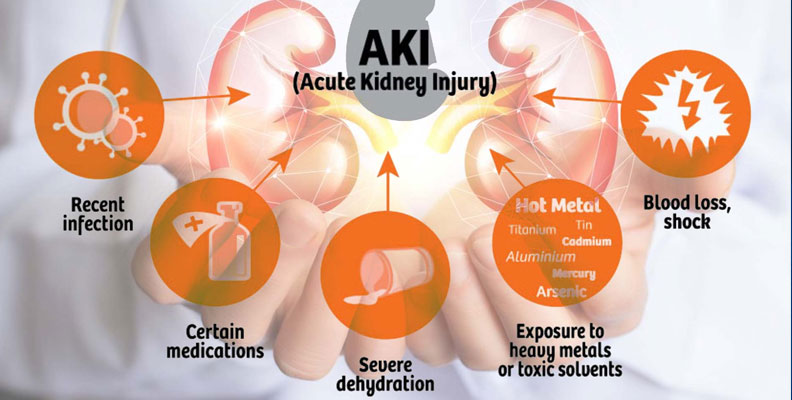
Acute Kidney Injury
Acute kidney injury (AKI) is a sudden loss of kidney function. It happens quickly, often over just a few hours or days. Causes can include severe infections, dehydration, or damage from medications. Treatment involves addressing the underlying cause, managing symptoms, and sometimes dialysis to help the kidneys recover.
Risk factors for acute kidney injury include:
- Severe infections like sepsis
- Dehydration from vomiting, diarrhea, or inadequate fluid intake
- Use of certain medications, especially those that can damage the kidneys
- Conditions that affect blood flow to the kidneys, such as heart failure or severe burns
- Advanced age, especially in combination with other risk factors
- Chronic diseases like diabetes or high blood pressure
- Recent surgery, especially involving the kidneys or blood vessels
Symptoms of acute kidney injury may include:
- Decreased urine output or no urine output at all
- Swelling in the legs, ankles, or around the eyes
- Fatigue or weakness
- Shortness of breath
- Nausea and vomiting
- Confusion or difficulty concentrating
- Chest pain or pressure
- Irregular heartbeat or palpitations
Diagnosis:
- Blood tests to measure levels of waste products like creatinine and urea.
- Urine tests to check for protein, blood, or other abnormalities.
- Imaging tests like ultrasound or CT scan to visualize the kidneys and urinary tract.
- Review of medical history and assessment of symptoms.
Treatment:
- Addressing underlying causes, such as treating infections or stopping medications that may be harming the kidneys.
- Fluid replacement to correct dehydration and improve kidney function.
- Medications to manage symptoms and complications, such as controlling blood pressure or treating electrolyte imbalances.
- Dialysis in severe cases to help remove waste products from the blood and support kidney function until they recover.
- Monitoring kidney function closely and adjusting treatment as needed.