
What is peritoneal dialysis?
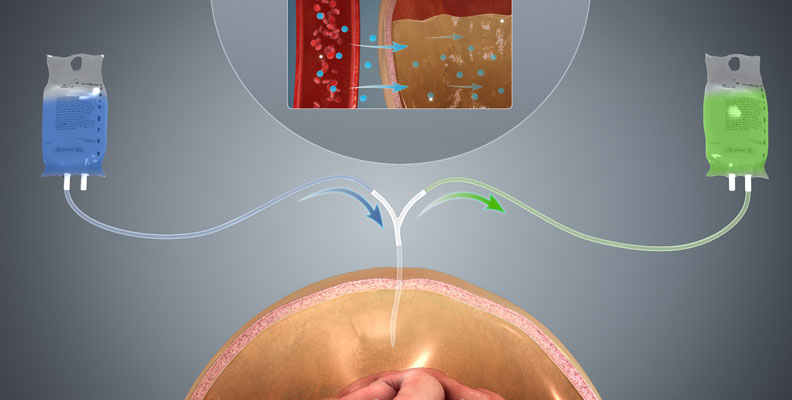
Peritoneal dialysis uses a peritoneal dialysis (PD) catheter in your abdomen to filter your blood. The catheter filters blood through the peritoneum, a membrane in your abdomen.
Before peritoneal dialysis
A doctor performs surgery to implant the catheter. This typically happens about 3 weeksTrusted Source in advance.
You typically receive training from a dialysis nurse for a couple of weeks before dialysis to learn to care for the catheter site and perform the exchanges.
During peritoneal dialysis
During treatment, a special fluid called dialysate flows into the peritoneum. The dialysate absorbs waste. Once the dialysate draws waste out of the bloodstream, it’s drained from your abdomen.
This process can take a few hours and needs to be repeated 3 to 5 times daily. But this fluid exchange can happen while you’re sleeping or awake—and even during daily activities.
Types of peritoneal dialysis include:
Continuous ambulatory peritoneal dialysis (CAPD): Your abdomen is filled and drained multiple times daily. This method doesn’t require a machine and must be performed while awake.
Continuous cycling peritoneal dialysis (CCPD): CCPD uses a machine to cycle the fluid in and out of your abdomen. It’s usually done at night while you sleep.
Intermittent peritoneal dialysis (IPD): This treatment is usually performed in the hospital, though you may perform it at home. It uses the same machine as CCPD, but the process takes longer.
After peritoneal dialysis
After treatment, you’ll need to take care of your exit site, catheter, and other supplies to prevent infection.
Benefits-PD at home may be the right treatment for you if you work, study, or travel regularly and if it suits your lifestyle and medical and physical condition. It may provide more flexibility, freedom, and independence than other types of dialysis. It can save you and your caregivers frequent trips to the hospital or clinic.
Portable equipment makes it easier to perform treatment in other locations. Treatment doesn’t require daily needles, is usually painless, and is considered gentler on your body than other types of dialysis. As a result, you feel better directly after your dialysis when compared to other dialysis types. Finally, because PD is performed daily and cleanses the blood continuously over 24 hours, you are receiving more frequent dialysis.
These benefits aside, there are additional items you should consider before discussing PD with your clinician. You should be aware that PD, like any dialysis treatment, requires special considerations. You will:
- Need to get used to the feeling of performing PD. You may experience some physical symptoms, such as fullness, when you begin your treatments.
- Have to follow important precautions to avoid the risk of infection, which your healthcare team will teach you.
- Need storage space in your home for PD supplies and equipment.
- Have a catheter implanted in your abdomen for the duration of your therapy.