
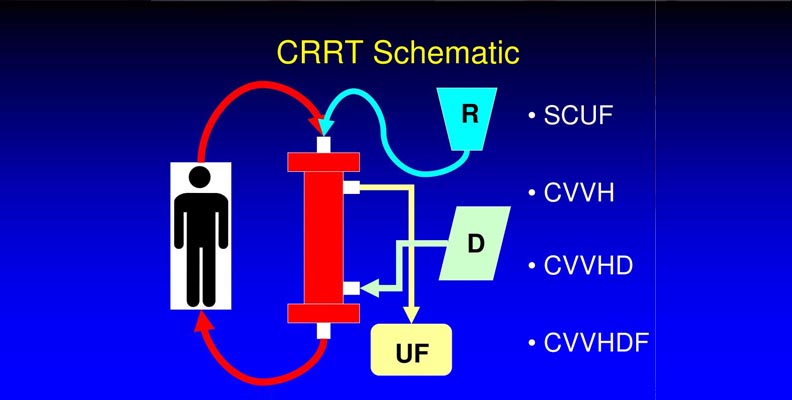
Continuous renal replacement therapy (CRRT)
Continuous renal replacement therapy (CRRT) is a type of treatment used for patients with severe kidney problems. It works by continuously filtering and cleaning the blood, much like how healthy kidneys would. This helps remove waste products and excess fluids from the body when the kidneys are unable to do so on their own.
Risk factors for continuous renal replacement therapy (CRRT) may include:
- Bleeding: Risk of bleeding due to the use of anticoagulants to prevent blood clotting during CRRT.
- Infection: Possibility of infection at the catheter insertion site or in the bloodstream.
- Fluid and Electrolyte Imbalance: Risk of imbalance in fluids and electrolytes, which may require careful monitoring and adjustment during CRRT.
- Hypotension: Potential for low blood pressure due to fluid removal during CRRT.
- Catheter-related Complications: Risks associated with the insertion and maintenance of the catheter used for CRRT, such as dislodgement or infection.
- Metabolic Disturbances: Possibility of metabolic changes, such as changes in blood pH or electrolyte levels, during CRRT.
Symptoms during continuous renal replacement therapy (CRRT) may include:
- Low blood pressure: Feeling dizzy or lightheaded.
- Nausea or vomiting: Feeling sick to your stomach.
- Muscle cramps: Pain or tightness in the muscles.
- Bleeding: Blood in urine or stools, or bleeding from catheter insertion site.
- Infection: Fever, chills, redness, or swelling at catheter site.
- Electrolyte imbalances: Symptoms like weakness, confusion, or irregular heartbeats due to changes in electrolyte levels.
Diagnosis:
- Blood tests to measure kidney function and electrolyte levels.
- Monitoring vital signs such as blood pressure, heart rate, and oxygen levels.
- Evaluation of fluid balance and urine output.
- Assessment of symptoms and medical history.
Treatment:
- Continuous renal replacement therapy (CRRT) to filter and clean the blood when the kidneys are unable to do so adequately.
- Fluid and electrolyte management to maintain balance and prevent imbalances.
- Medications to manage symptoms and complications, such as blood pressure medications or antibiotics for infections.
- Monitoring and adjustment of CRRT parameters based on patient response and laboratory values.
- Addressing underlying conditions or factors contributing to kidney dysfunction, such as infections or medications.
- Supportive care to address any additional needs or complications that may arise during treatment